

The era of the "Bloated Unicorn" is over. In 2026, the most exciting and profitable sector of the software industry isn't found in Silicon Valley boardrooms, but in the hands of solo founders and small teams building Micro-SaaS solutions. These are specialized, lean, and highly profitable software products that solve specific problems for specific audiences. Powered by the explosion of No-Code tools and Large Language Models (LLMs), the barrier to entry for building software has effectively vanished.
This article is a comprehensive guide to building, scaling, and exiting a Micro-SaaS business in the 2026 economy. we will explore why "Micro" is the new "Mega," how to identify profitable niche problems, and the exact technical stack that allows a non-technical founder to build world-class software. This is not about building the next Facebook; it's about building a Cash-Flow Machine that provides you with both financial wealth and personal sovereignty.
In the following sections, we will break down the "Micro-SaaS Lifecycle"—from the initial diagnostic audit of a niche to the final high-multiple exit. We will discuss the psychology of subscription pricing, the architecture of "Self-Serve" success, and the role of AI as your virtual CTO. If you've ever wanted to own your own software company but felt held back by technical or financial barriers, this is your blueprint for success.
- The Micro-SaaS Edge: Why being small is your greatest competitive advantage in 2026.
- Niche Identification: How to find "Expensive Problems" in underserved vertical markets.
- No-Code & AI Stack: Building complex software without writing a single line of traditional code.
- Product-Led Growth (PLG): Designing software that sells itself through superior UX and immediate value.
- Subscription Alchemy: Mastering the metrics of Churn, LTV, and CAC for predictable growth.
- AI-First Features: Integrating intelligent agents to provide "Magical" user experiences.
- The Solo-Founder Workflow: Managing a 7-figure software company as a one-person team.
- Exit Architecture: How to position your Micro-SaaS for a 4x-6x multiple sale.
- Community-Led Development: Using your users as your R&D department.
- Sovereign Software: Building a business that is location-independent and borderless.
01. The Death of the Generalist SaaS
For the last decade, the goal of SaaS was to be everything to everyone. Platforms like Salesforce or HubSpot built massive, complex suites designed to serve every possible business need. But in 2026, these generalist platforms are facing a "Death by a Thousand Cuts." Users are tired of paying for 90% of features they never use and struggling with interfaces designed for a million different use cases. They are moving toward Vertical SaaS—tools designed specifically for their industry and their unique workflows.
A Micro-SaaS is the ultimate expression of this trend. It doesn't try to solve "Marketing"; it solves "Lead Management for Boutique Interior Designers." By narrowing the focus, you can create a user experience that is 10x better than a generalist tool. You speak the language of your users, you understand their specific pain points, and you solve their problems with surgical precision. This Deep Specialization is your moat. A giant competitor can't justify building a feature for such a small niche, but for you, that niche is a 7-figure opportunity.
Furthermore, Micro-SaaS businesses are incredibly resilient. Because they solve a specific, essential problem, they are the last thing a business cancels during a downturn. They become "load-bearing" parts of their users' workflows. This creates a level of Revenue Stability that is rare in the digital economy. You aren't chasing the next viral trend; you are building a utility that people rely on every single day. This is the foundation of a high-value, sustainable business.

The Rise of the "Indie Hacker" CEO
The image of a software CEO is changing. It's no longer just the hoodie-wearing developer in a basement; it's the Strategic Orchestrator who knows how to connect different tools to create value. In 2026, you don't need to know how to build a database from scratch; you need to know how to use AI to design the database and No-Code tools to build the interface. The "Indie Hacker" is now a sophisticated entrepreneur who prioritizes profit over "funding rounds" and lifestyle over "hustle culture."
This shift has democratized the software industry. People with deep domain expertise in fields like law, medicine, or construction are now building their own software to solve the problems they've faced for years. They are the Subject Matter Experts (SMEs) turned founders. They have a massive advantage over traditional developers because they understand the "Problem Space" intimately. In 2026, the "What" you are building is far more important than the "How" you are building it. The logic is the lever.
Micro-SaaS as a Lifestyle Asset
One of the most attractive aspects of Micro-SaaS is its ability to be a Lifestyle Asset. Unlike a traditional startup that requires 80-hour weeks and constant pressure from investors, a Micro-SaaS can be designed to run with minimal maintenance. Once the product is built and the initial growth systems are in place, the founder's role shifts to strategic oversight and community engagement. Many Micro-SaaS founders work less than 10 hours a week while generating 7-figure annual recurring revenue (ARR).
02. Identifying the $1M Niche: The Diagnostic Audit
The most common reason Micro-SaaS businesses fail is that they build a "solution in search of a problem." In 2026, successful founders start with a Diagnostic Audit of a specific industry or workflow. They don't ask, "What software should I build?" They ask, "What is currently costing this industry the most time, money, or frustration?" They look for the "Expensive Problems" that are currently being solved with messy spreadsheets, manual labor, or outdated legacy tools.

The "Excel to SaaS" Pipeline
A classic strategy for finding a Micro-SaaS idea is the "Excel to SaaS" pipeline. Almost every industry has a critical process that is currently being managed in a complex, fragile Excel spreadsheet. These spreadsheets are the Prototypes for your software. If a business is relying on a spreadsheet to manage its inventory, its employee scheduling, or its client billing, they are already demonstrating a need for a dedicated tool. Your job is to take that spreadsheet and turn it into a secure, collaborative, and automated SaaS application.
When you find a spreadsheet that multiple people are using, you've found a market. The spreadsheet proves three things: 1. The problem exists. 2. The problem is important enough to try and solve. 3. People are already "paying" for a solution with their time and effort. By turning that spreadsheet into software, you are offering a Massive Upgrade in terms of data integrity, user experience, and automation. You are moving them from the "Stone Age" of manual data entry to the "Space Age" of intelligent workflows.
Vertical Niche Dominance
Don't be afraid of "small" markets. In 2026, a market of 5,000 potential customers is more than enough for a 7-figure Micro-SaaS. If you can capture 10% of that market (500 customers) at a price of $150/month, you have a business doing $900,000 a year with 90% profit margins. That is a life-changing business for a solo founder. By dominating a small, vertical niche, you also eliminate 99% of your competition. You aren't competing with the "Big Guys"; you are the Only Choice for your specific audience.
03. The 2026 No-Code & AI Tech Stack
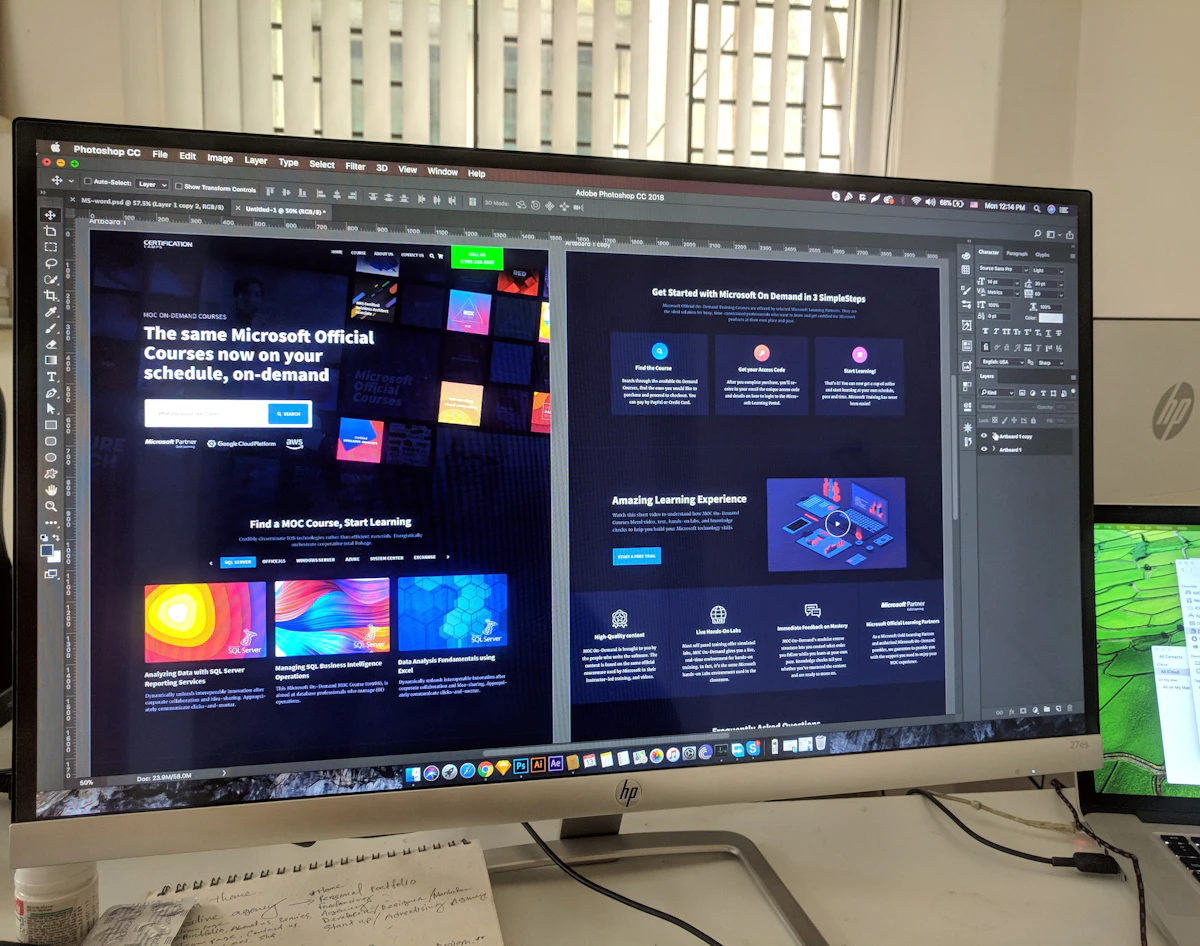
In 2026, the "How" of building software has been completely transformed. The modern Micro-SaaS stack is a combination of Visual Development Platforms and AI Agents. This allows founders to build complex, scalable, and secure applications at a fraction of the cost and time of traditional development. You are no longer "writing code"; you are "orchestrating logic."
The "Core Four" of No-Code
Most 7-figure Micro-SaaS businesses in 2026 are built on what we call the "Core Four" of No-Code:
- Frontend (The Interface): Tools like Bubble, WeWeb, or FlutterFlow allow you to design beautiful, responsive user interfaces that look and feel like custom-coded apps.
- Backend (The Logic & Database): Platforms like Xano or Supabase provide enterprise-grade databases and API management that can handle millions of users without breaking.
- Automation (The Glue): Zapier, Make.com, or n8n connect your app to thousands of other tools, allowing you to build complex workflows without manual coding.
- AI (The Brain): Integrating OpenAI, Anthropic, or specialized LLMs directly into your app to provide intelligent features like automated reporting, content generation, or predictive analysis.
By using this stack, you retain complete ownership and control of your product without the need for a large technical team. You can iterate faster, launch new features in hours, and respond to user feedback in real-time. This Agility is your secret weapon. While a traditional company is still having meetings about a new feature, you've already built it, tested it, and shipped it to your users.
AI as Your Virtual CTO
Even if you are non-technical, AI can act as your Virtual CTO. You can use tools like Claude or GPT-4 to help you design your database schema, write complex logic, and troubleshoot technical issues. AI can explain technical concepts in plain English, suggest the best tools for your specific needs, and even write the small snippets of code (like CSS or JavaScript) that you might need for advanced customization. In 2026, the "Technical Gap" has been closed by the "Intelligence Bridge."
04. Product-Led Growth (PLG): The Art of the Self-Selling App
Micro-SaaS businesses don't have the budget for a massive sales team. Instead, they rely on Product-Led Growth (PLG). This is a strategy where the product itself is the primary driver of customer acquisition, conversion, and expansion. The software is so easy to use, so valuable, and so "viral" that users naturally bring in more users. Your product is your best salesperson. It doesn't need a pitch; it just needs a "Try" button.

The "Aha!" Moment
The key to PLG is the "Aha!" moment—the exact point where a new user realizes the value of your software. In 2026, you must optimize your onboarding to get users to this moment as quickly as possible. Every second of friction is a potential customer lost. Use AI-driven onboarding to guide users through the setup, provide templates that they can use immediately, and show them the Immediate ROI of using your tool. If they don't see the value in the first 5 minutes, they probably never will.
For example, if you've built a Micro-SaaS that automates social media reporting, the "Aha!" moment isn't when they sign up; it's when they see their first beautiful, data-rich report generated in seconds. Your goal is to get them to that report with as few clicks as possible. Once they've experienced the value, they are 10x more likely to convert to a paid plan. You are selling the Result, not the tool.
Viral Loops and Network Effects
Even a Micro-SaaS can have viral loops. This could be as simple as a "Powered by [Your App]" link on the output of your software, or a referral program that rewards users for inviting their colleagues. In 2026, the most powerful loops are Collaborative. If your software allows multiple people to work together (e.g., a shared project dashboard), every new user naturally brings in several others. This creates a "Network Effect" where the value of your software increases as more people use it. You are building a community, not just a customer base.
05. Subscription Alchemy: Mastering the Metrics
The beauty of SaaS is the Predictability of Recurring Revenue. But to build a 7-figure Micro-SaaS, you must master the "Alchemy" of subscription metrics. You need to know exactly how much it costs to acquire a customer (CAC), how long they stay with you (Churn), and how much they are worth over their lifetime (LTV). In 2026, the most successful founders use AI to monitor these metrics in real-time and identify opportunities for optimization.

The War on Churn
Churn is the "Silent Killer" of SaaS. If you lose 10% of your customers every month, you have to replace your entire customer base every 10 months just to stay even. In 2026, the best defense against churn is Customer Success Automation. Use AI to identify users who are "at risk" (e.g., they haven't logged in for a week) and automatically send them personalized helpful content or offer a check-in call. By being proactive, you can solve their problems before they decide to cancel. You are protecting your revenue at the source.
Another way to reduce churn is to increase the Stickiness of your product. This means integrating your software so deeply into the user's workflow that it becomes "painful" to switch. This could be through data integrations, custom templates, or proprietary algorithms that get better the more they are used. You want to be the "OS" for their specific niche. When your software is the foundation of their business, they aren't just customers; they are partners.
Value-Based Pricing
Stop pricing based on "features." In 2026, the most profitable Micro-SaaS businesses use Value-Based Pricing. This means charging based on the actual value or ROI the user receives. This could be based on the number of transactions processed, the amount of time saved, or the number of leads generated. Value-based pricing allows you to capture more revenue as your users grow. It aligns your success with their success. When they win, you win. This is the ultimate win-win business model.
06. AI-First Features: The "Magical" UX
In 2026, "Software with AI" is no longer enough. You must build AI-First Software. This means the AI is not just a "chatbot" on the side; it is the core of the user experience. AI-first features are those that feel "magical" to the user—they do things that were previously impossible or required hours of manual work. This is how you differentiate your Micro-SaaS from the legacy competitors who are just "bolting on" AI features.

Generative Workflows
Instead of giving users a blank screen, give them a Generative Starting Point. Use AI to draft their first project, design their first template, or analyze their first set of data. This eliminates the "Cold Start Problem" and provides immediate value. In 2026, the role of the user is shifting from "Creator" to "Curator." Your software should do the heavy lifting of production, while the user provides the final "Human Touch" and strategic direction. You are the engine; they are the driver.
For example, if you've built a Micro-SaaS for legal document management, the AI shouldn't just "store" the documents; it should read them, summarize the key clauses, and alert the user to potential risks. It should draft the first version of a new contract based on the user's past preferences. This Generative Insight is what makes your software indispensable. You are providing an "Intelligence Layer" that your users can't get anywhere else.
Predictive Maintenance
Use AI to predict what your users will need before they even know they need it. This could be suggesting a new feature based on their usage patterns, alerting them to a potential issue in their data, or automatically optimizing their settings for better performance. This Anticipatory UX creates a sense of "Magic" and builds deep loyalty. Your software isn't just a tool; it's an intelligent assistant that is always one step ahead. It's the "Co-Pilot" for their business.
07. The Solo-Founder Workflow: Managing at Scale
Running a 7-figure Micro-SaaS as a solo founder requires a different kind of discipline. You must be the CEO, the Product Manager, the Marketer, and the Support Team—all at once. In 2026, this is only possible through Extreme Automation and Strategic Outsourcing. You must protect your "Genius Zone" ruthlessly and automate or delegate everything else. You are the architect of your time.

The "Zero-Support" Goal
Customer support is the biggest time-sink for any SaaS founder. In 2026, your goal should be "Zero-Support." This doesn't mean you ignore your customers; it means you build a product that is so intuitive and so well-documented that they never need to ask a question. Use AI-Powered Help Centers that can answer 95% of user queries instantly. Build "Self-Healing" features that automatically fix common user errors. When a user does need to contact you, it should be for a strategic conversation, not a technical problem. You are building a self-sufficient ecosystem.
Strategic Elite Collaboration
Even a solo founder needs help occasionally. But instead of hiring full-time employees, use a network of Elite Collaborators. These are specialists (technical developers, high-end designers, growth marketers) whom you hire on a project-by-project basis. In 2026, platforms like Toptal or specialized private networks allow you to access the top 3% of global talent instantly. You are building a "Flash Organization"—a team that assembles to solve a specific problem and then dissolves once the work is done. This keeps your overhead low and your quality high. You are the conductor of a digital orchestra.
08. Exit Architecture: Preparing for the Big Payday
One of the greatest benefits of the Micro-SaaS model is the Exit Potential. In 2026, there is a massive market for profitable, well-run software businesses. Aggregators, private equity firms, and even larger tech companies are constantly looking for Micro-SaaS assets to add to their portfolios. A Micro-SaaS with $500,000 in annual profit can easily sell for $2M to $3M (a 4x-6x multiple). This is the ultimate "Big Payday" for a solo founder. You are building an asset, not just a job.
Building for Sale from Day One
To get a high multiple, you must build your business to be Transferable. This means having clean code (or well-documented No-Code logic), a clear brand identity, a loyal customer base, and, most importantly, Systems that Work Without You. If the business collapses the moment you stop working, it's not an asset; it's a job. Use a "Sale-Ready" checklist from day one: keep your finances separate, document every process, and ensure your data is clean and accessible. You are building a "Turnkey" business that a buyer can step into and run immediately.
The Acquisition Marketplace
In 2026, platforms like Acquire.com or Empire Flippers make it easier than ever to sell your Micro-SaaS. You can list your business, connect with verified buyers, and close the deal in weeks. The key to a successful sale is Transparency. Be honest about your metrics, your challenges, and your growth potential. A buyer isn't looking for "Perfection"; they are looking for "Certainty." Provide the data and the documentation they need to feel confident in the investment, and you will command the highest multiple in the market. You are the architect of your own exit.
09. Case Studies: Micro-SaaS Success Stories
To illustrate the power of the Micro-SaaS model, let's look at three hypothetical (but highly realistic) case studies of founders who built and exited 7-figure businesses in 2025-2026.
Case Study 1: The Legal Tech Innovator
The Problem: Small law firms struggling to manage and summarize thousands of pages of discovery documents.
The Solution: A Micro-SaaS that uses AI to automatically categorize, summarize, and flag key risks in legal documents. Built on Bubble and Xano with OpenAI integration.
The Result: Reached $1M ARR within 18 months. Sold to a larger legal tech aggregator for $5M (a 5x multiple). The founder was a former lawyer with no prior technical experience.
Case Study 2: The E-commerce Optimizer
The Problem: Shopify store owners losing revenue due to poor cart conversion on mobile devices.
The Solution: A simple, one-click Shopify app that uses AI to personalize the checkout experience based on the user's past behavior. Built as a "Self-Serve" tool with zero support requirements.
The Result: Reached 2,000 customers at $49/month ($1.1M ARR) with 95% profit margins. The founder manages the business in less than 5 hours a week while traveling the world. It is a "Cash-Flow Machine" that provides total freedom.
Case Study 3: The Specialized HR Tool
The Problem: Remote-first tech companies struggling to manage employee "Burnout" and mental health.
The Solution: A Slack-integrated Micro-SaaS that uses AI to analyze team communication patterns and provide "Early Warning" alerts to HR managers. Focused on deep privacy and employee anonymity.
The Result: Built a loyal community of HR leaders. Reached $500k ARR and was acquired by a major HR software suite as a strategic "Add-On" feature. The founder used the proceeds to start their next Micro-SaaS venture.
10. Conclusion: Your Future as a Software Founder
The Micro-SaaS Revolution is the greatest opportunity for wealth creation and personal freedom in the 2026 economy. The barriers are gone, the tools are ready, and the market is waiting. You don't need a degree in computer science, you don't need a million dollars in funding, and you don't need a 50-person team. You just need a Problem to solve and the Will to build the solution.
The world is full of "Expensive Problems" waiting for a Micro-SaaS to solve them. Will you be the one to build it? The choice is yours. Start your diagnostic audit today. Identify your niche. Build your first prototype. The journey to 7-figure software success starts with a single step. Claim your place in the new economy. Become a Micro-SaaS founder. Build your empire.
Remember, the goal isn't just to build software; it's to build Freedom. Freedom from the 9-to-5, freedom from the "Hustle," and freedom to live life on your own terms. This is the true promise of the Micro-SaaS revolution. It's time to take control of your destiny. It's time to build your own "Cash-Flow Machine." The future is yours to orchestrate.
11. Glossary of Terms
- Micro-SaaS
- A small, specialized software-as-a-service business that solves a specific problem for a vertical niche, typically run by a solo founder or small team.
- No-Code
- A movement and set of tools that allow users to build complex software applications using visual interfaces rather than traditional programming languages.
- Vertical SaaS
- Software designed specifically for a single industry or vertical market (e.g., software for dentists), as opposed to generalist tools (e.g., general CRM).
- Product-Led Growth (PLG)
- A business methodology where user acquisition, expansion, and retention are driven primarily by the product itself.
- Churn Rate
- The percentage of subscribers to a service who discontinue their subscriptions within a given time period.
- LTV (Lifetime Value)
- The total revenue a business can expect from a single customer account throughout the business relationship.
- Aha! Moment
- The pivotal moment in the user's journey where they first realize the core value of your product.
- Exit Multiple
- The factor (e.g., 4x or 6x) by which a business's annual profit or revenue is multiplied to determine its sale price.
12. Frequently Asked Questions (FAQ)
Do I need to be a developer to build a Micro-SaaS?
No. In 2026, the majority of Micro-SaaS businesses are built using No-Code platforms like Bubble, WeWeb, and Xano. While technical knowledge is helpful, the ability to orchestrate logic and understand user problems is far more important.
How much does it cost to start a Micro-SaaS?
You can start a Micro-SaaS for less than $500. Most No-Code tools have free or low-cost starter plans. Your primary investment is your time and your strategic thinking. As you grow and gain customers, you can scale your tech stack accordingly.
How do I find my first 10 customers?
Start with direct outreach in the communities where your target audience hangs out (LinkedIn, specialized forums, industry groups). Offer a free trial or a heavily discounted "Beta" rate in exchange for feedback. Focus on solving their problem manually first, then automate it with your software.
What is the "Sweet Spot" for Micro-SaaS pricing?
For B2B Micro-SaaS, the sweet spot is typically between $49 and $249 per month. This is high enough to generate significant revenue with a small customer base, but low enough to be a "No-Brainer" for most business owners. Always prioritize value-based pricing over feature-based pricing.
How do I protect my Micro-SaaS from competitors?
Your best defense is Deep Niche Authority and a Superior User Experience. By being the absolute best at solving a specific problem for a specific audience, you build a "Moat" that is difficult for generalist competitors to cross. Focus on your users, and the competition will take care of itself.
Ready to Launch Your Own Micro-SaaS?
Join the EarnNova SaaS Foundry. Get the exact No-Code blueprints, AI integration guides, and exit strategies used by the world's most successful solo software founders.
Join the Foundry Now